

The inaugural South African Motor Body Repairers’ Association (SAMBRA) Junior Skills Competition was successfully held at Baysville Technical High School in East London on Saturday, 5 June, marking an important milestone in the Association’s commitment to developing future artisans for the motor body repair sector. SAMBRA is a proud association of the Retail Motor Industry Organisation (RMI).
Competition creates real-world learning opportunities
Launched as part of Youth Month activities in the Eastern Cape, the competition provided learners with a valuable opportunity to put their technical training into practice under industry-led assessment conditions, while gaining exposure to the standards and skills required within the modern motor body repair environment.
This year’s event featured two separate skills competitions – panelbeating and spraypainting – showcasing the diverse technical disciplines that form part of the motor body repair industry.
Industry training supports learner development
In addition to the competition, learners also benefited from targeted industry training provided on Friday, 5 June, by Apex Paint Company. The in-house sessions were delivered to scholars currently involved in spraypainting and panelbeating disciplines at Baysville and formed part of a broader skills development initiative.
The training covered key areas of automotive refinishing and workshop readiness, including automotive paint technology, surface preparation and refinishing, spray-painting techniques, workplace health and safety, PPE usage and hazardous material handling, as well as career guidance in the automotive refinishing industry.
Panelbeating competition tests practical repair skills
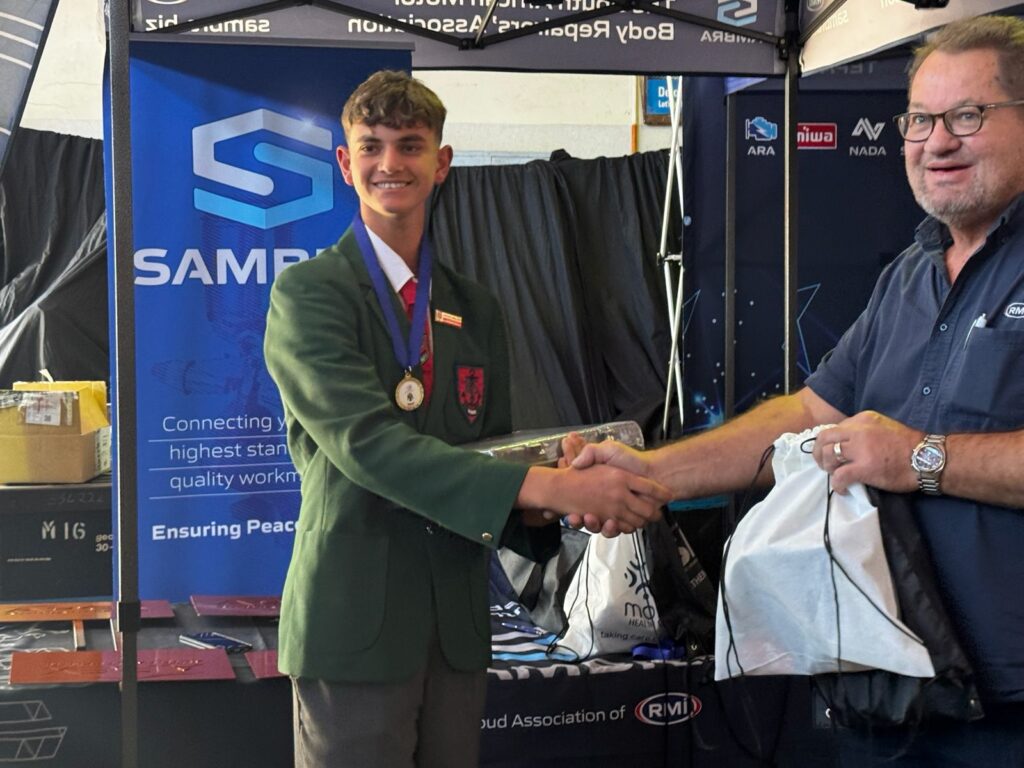
In the panelbeating competition, learners Devandre Bennet and Jacques Walters completed a practical repair project designed to assess their skills in metal repair, welding, surface preparation, and body filler application. Jacques Walters ultimately claimed first place after demonstrating strong technical ability throughout the competition.
Spraypainting competition highlights refinishing expertise
The spraypainting competition saw learners Alvandre Valentine and James Berling participate in a practical refinishing project focused on automotive paint systems and coating applications. James Berling emerged as the winner following a strong performance across both the practical and theoretical components of the assessment.
Panelbeating competition
The practical panelbeating assessment consisted of two key tasks. Learners were required to complete a patch repair on a vehicle door, which involved removing a damaged section of the panel, fabricating a repair plate, fitting the patch correctly, and welding it into position. Once completed, they were required to grind and finish the welded area in preparation for refinishing.
The second task focused on body filler application and finishing techniques. Working on vehicle bonnets, the learners prepared the surface, mixed and applied body filler, shaped the repair areas, and sanded the surface to create a smooth finish suitable for primer application.
Throughout the project, participants were assessed on a range of competencies, including safe use of tools and equipment, accuracy of cutting and fitting repair plates, welding quality, surface preparation, body filler application, shaping and sanding techniques, understanding of repair procedures, and overall workmanship.
Both learners demonstrated a solid foundation of knowledge and successfully completed the required tasks. While areas such as welding consistency, panel shaping, body filler application, and finishing techniques will continue to require further development, both participants showed encouraging progress and a willingness to learn.
Spraypainting competition
The spraypainting competition challenged learners to demonstrate their understanding of automotive paint systems and coating applications through a practical bonnet refinishing project.
During the assessment, learners prepared and applied various coating layers to the bonnets, with each section representing a different stage of the refinishing process, including bare metal, etch primer, HS/MS primer, solid base coat, metallic base coat, pearl base coat, 2K paint, and clear coat.
Participants were assessed on both theoretical knowledge and practical application techniques. They were required to identify each coating layer, explain its purpose, and demonstrate an understanding of its role within the complete automotive refinishing system.
Particular attention was given to surface preparation techniques, spray gun handling and control, application consistency and coverage, adhesion, corrosion protection, filling properties, colour development, gloss retention and durability, as well as workplace safety and housekeeping practices.
Both learners demonstrated a sound understanding of the functions of the various paint products and showed competence in spraypainting techniques, including spray pattern control, overlap, film build, and overall finish quality. The project provided valuable hands-on experience and reinforced the theoretical knowledge covered during training.
As this was the first time both learners had been exposed to the complete automotive refinishing process, the competition provided an important learning opportunity. Their willingness to learn, active participation, and application of new skills laid a strong foundation for future development within the automotive refinishing sector.
Building the future pipeline of artisans
According to Abie Kriek, SAMBRA Regional Representative for the Eastern Cape, the competition was never intended to identify finished artisans but rather to create an environment where learners could gain practical experience, build confidence, and develop a deeper understanding of the repair process.
“One of the biggest challenges facing our industry is attracting and developing young talent. Competitions such as these give learners an opportunity to experience real-world repair scenarios while allowing industry to engage directly with the next generation of artisans,” says Kriek.
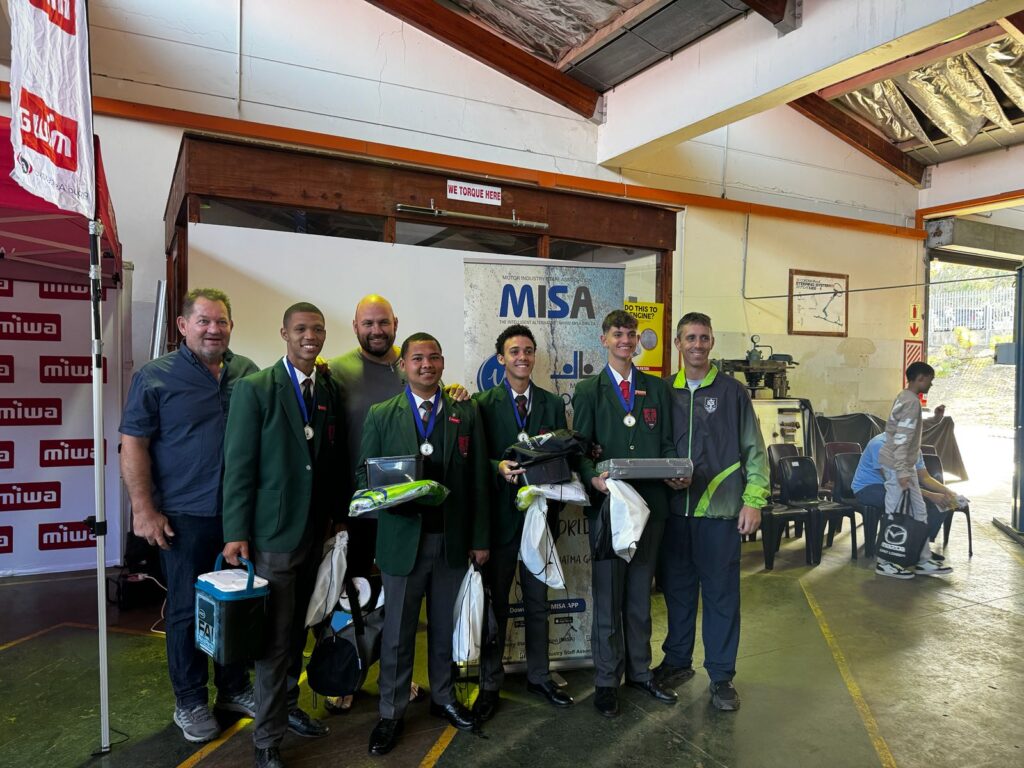
“We are extremely proud of the effort, commitment, and positive attitude displayed by all four learners throughout the competition. Whether in panelbeating or spraypainting, they embraced the challenge, accepted guidance, and demonstrated the enthusiasm and willingness to learn that our industry needs for the future.”
Industry and education working together
The competition formed part of a broader Youth Month initiative that also included specialised industry training presented by Apex Paint Company, exposing learners to automotive refinishing technology, workplace safety requirements, and career opportunities within the sector.
Werner Oosthuizen, Principal of Baysville Technical High School, added his appreciation for the initiative:
“Thank you so much for putting Baysville School on the map. We truly appreciate everything you have done to create opportunities for our learners to showcase their talents and demonstrate to the world that they possess skills that not many people have.
Thank you as well for all the effort you put into the prize-giving event and for the wonderful prizes that the boys received. Your dedication and commitment have made a meaningful difference in the lives of our learners.”
A successful foundation for future competitions
Kriek says the success of the inaugural event has reinforced the value of practical, industry-led skills development programmes.
“South Africa’s motor body repair sector relies on a pipeline of skilled artisans. By investing in young people today, we are helping to secure the future sustainability and professionalism of our industry. This competition may have been the first of its kind for SAMBRA in the Eastern Cape, but it certainly won’t be the last.”
As Youth Month draws attention to the importance of empowering young South Africans, the success of the inaugural SAMBRA Junior Skills Competition demonstrates how collaboration between industry and technical schools can help bridge the gap between education and employment while creating meaningful opportunities for future artisans.


